Glow Journal › melasma hyperpigmentation melasma-friendly skincare-routine pigmentation sun-protection
melasma hyperpigmentation melasma-friendly skincare-routine pigmentation sun-protectionMelasma vs Hyperpigmentation

Melasma vs Hyperpigmentation: What They Are, Why They Happen, and How to Care for Your Skin
They’re often confused, but melasma and hyperpigmentation aren’t the same. Here’s a friendly, practical guide to understanding the difference and tailoring a skincare routine that fits your needs.

What is melasma?
Melasma is a hormonal-driven condition that creates darker patches on the skin. It’s most common on the cheeks, forehead, upper lip, and chin, and it often appears symmetrically. It can flare with hormonal changes (like pregnancy or birth control) and sun exposure.
What is hyperpigmentation?
Hyperpigmentation is a broad term for dark patches that appear on the skin. It can result from inflammation (post-inflammatory hyperpigmentation, or PIH), sun exposure (sunspots), or hormonal changes (like melasma). Hyperpigmentation is not limited to hormonal causes and can affect any area that’s been irritated, sun-exposed, or inflamed.
- Post-inflammatory hyperpigmentation (PIH): Marks after acne, waxing, or skin injuries.
- Sunspots / solar lentigines: Flat brown spots on sun-exposed areas, often increasing with age.
- Melasma: Hormone-related dark patches on the face.
How to tell melasma from hyperpigmentation
- Pattern: Melasma is usually symmetric (the same patching on both sides of the face). Hyperpigmentation tends to be patchy or spotty and can be irregular.
- Onset & triggers: Melasma often flares with hormonal changes; hyperpigmentation commonly follows inflammation or sun exposure.
- Location: Melasma commonly affects the cheeks, forehead, upper lip, and jawline. PIH can appear anywhere inflammation occurred.
- Recurrence: Melasma can recur or persist even after initial improvement; hyperpigmentation may fade with time and consistent care.
If you’re unsure, a quick visit with a dermatologist or licensed esthetician can help diagnose and tailor treatment.
A practical, melasma-friendly skincare plan
Consistency matters. Here’s a simple routine you can follow daily, tailored toward melasma management, with links to your products.
Morning routine
-
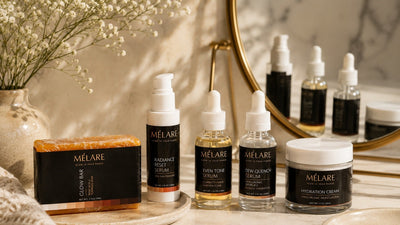
Cleanse: Glow Bar Brightening Cleanse via the MÉLARE Melanin Hyperpigmentation Set
MÉLARE Melanin Hyperpigmentation Set -
Brighten (Vitamin C): Brightening Vitamin C Serum
Brightening Vitamin C Serum -
Tone/Support + Moisturize: Watermelon Hydration Moisturizer (contains Niacinamide for barrier support)
Watermelon Hydration Moisturizer -
Optional booster (for more brightness):
Vitamin C Serum Duo (two serums in one)
Or Power Bundle: 2x Vitamin C Serums + 2x Glow Bars - Sunscreen: Use any SPF 30+ broad-spectrum sunscreen you already have. (Note: I didn’t find a standalone sunscreen product in your current catalog.)
Evening routine
-
Cleanse: Use the same cleanser from the Melanin Hyperpigmentation Set
MÉLARE Melanin Hyperpigmentation Set - Optional exfoliation (2–3x/week): A gentle AHA/BHA exfoliant to speed cell turnover. If you don’t have one in your catalog, skip for now.
-
Targeted brighten/anti-pigment: Choose one or two of the following based on tolerance:
- Brightening Vitamin C Serum
- Vitamin C Serum Duo
- Power Bundle -
Moisturize: Watermelon Hydration Moisturizer
Watermelon Hydration Moisturizer
Notes: - If you’re aiming for melasma-focused improvement, consider adding targeted actives like azelaic acid or tranexamic acid as your tolerance allows. Patch-test and introduce actives slowly. - Patch-test any new combination for 7–10 days, especially when layering actives. - Sun protection remains the foundation for long-term results—use sunscreen daily, rain or shine.
Key ingredients worth knowing for melasma & hyperpigmentation
Here’s a quick primer on ingredients commonly used to address uneven skin tone and pigmentation. Patch-test and start with lower concentrations if you’re new to actives.
- Vitamin C (L-ascorbic acid): Brightens and provides antioxidant protection. Look for stable formulas, around 10–20% for daily use.
- Niacinamide (Vitamin B3): Anti-inflammatory, barrier-supporting, and helps even tone.
- Azelaic acid: Inhibits pigment production and has calming, anti-inflammatory benefits. Common concentrations: 10–20%.
- Tranexamic acid: Targeted brightening ingredient shown to help with melasma in many people; found in serums/creams.
- Glycolic/Lactic acid (AHA) or Salicylic acid (BHA): Gentle exfoliation to promote turnover; avoid over-exfoliating.
- Kojic/arbutin/licorice extract: Brighteners; patch-test and use with care.
Choosing products that fit your skin type and sensitivity is key. I can tailor a short list based on your skin type and budget if you’d like.
Myths vs. facts about melasma and hyperpigmentation
- Myth: You can cure melasma quickly with scrubs. Fact: Consistent actives and sun protection are more effective long-term; scrubs can irritate and worsen pigmentation.
- Myth: Hyperpigmentation disappears on its own in a few weeks. Fact: Many spots fade gradually over months with a steady routine.
- Myth: Sunscreen isn’t needed on cloudy days. Fact: UV rays can still affect skin even when it’s overcast.
References
Shop the essentials for melasma-friendly skincare
Build a simple routine and layer in targeted actives as needed. Start with these core categories, then add targeted options for pigment as you go:
- Brightening vitamin C serums
- Niacinamide serums or day creams
- Broad-spectrum sunscreen (SPF 30+)
- Gentle exfoliants (AHA/BHA) a few times per week
- Azelaic acid or tranexamic acid for targeted spots
Want help picking exact products for your skin type and budget? Visit our Melasma-Friendly Skincare collection to browse options designed with everyday shoppers in mind.
Final thoughts
Understanding the difference between melasma and hyperpigmentation helps you choose a smarter routine. Be gentle with your skin, protect it from the sun, and give your regimen time to show results. If you’d like, I can tailor a quick, personalized plan based on your skin type, tone, and budget—just tell me a bit about yourself (skin type, concerns, and preferred product types).