Glow Journal › dark spots
dark spotsWhy Your Dark Spots Aren't Fading: 7 Skincare Mistakes That May Be Slowing Your Progress

Dark spots that won't fade usually aren't a sign that dark-spot treatment "doesn't work" for you — they're more often a sign that something in the routine is working against itself. The most common culprits are inconsistent sunscreen use, over-exfoliating, picking at healing skin, switching products before they've had time to work, layering on too many actives at once, neglecting the skin barrier, and expecting results faster than skin biology allows. Fixing even two or three of these can be the difference between a routine that plateaus and one that actually clears.
Below is a closer look at each mistake, how to recognize it in your own routine, and what a gentler, more effective approach looks like.
1. Skipping or Being Inconsistent with Sunscreen
This is the single biggest reason dark spots seem to "never fade." Ultraviolet (UV) light stimulates the pigment-producing cells (melanocytes) in skin, and it does two damaging things at once: it darkens hyperpigmentation that's already there, and it triggers new spots to form (DermNet). Even a few unprotected minutes outside — running errands, sitting near a window, commuting — can undo weeks of progress from brightening ingredients.
The American Academy of Dermatology (AAD) recommends daily broad-spectrum sunscreen, SPF 30 or higher, reapplied every two hours outdoors, as a core part of both preventing new dark spots and helping existing ones fade. For visible discoloration, the AAD specifically suggests a tinted sunscreen containing iron oxide, since iron oxide helps block visible light (not just UV), which can also contribute to pigmentation in medium-to-deep skin tones.
The fix: Treat sunscreen as a non-negotiable step, not an occasional one — every morning, rain or shine, reapplied if you're outdoors for extended periods.
2. Over-Exfoliating
Exfoliation has a place in a dark-spot routine — gentle, consistent exfoliation supports cell turnover and can help brightening ingredients penetrate more evenly. But more is not better. Stacking multiple exfoliating acids, exfoliating too frequently, or combining chemical exfoliants with physical scrubs can damage the skin barrier and trigger the exact inflammation that leads to more discoloration, not less.
When skin is over-exfoliated, irritation itself can act as a trigger for post-inflammatory hyperpigmentation (PIH) — pigment that appears after the skin has been inflamed or injured, including from products that are too harsh (NCBI StatPearls; Journal of Clinical and Aesthetic Dermatology, via PMC). In other words, an aggressive exfoliation routine aimed at fading spots can end up creating new ones. Dermatologists interviewed by Healthline note that recovering from over-exfoliation can take as long as a full skin cycle (up to about a month), and that the right move when skin feels raw, tight, or stings is to stop exfoliating entirely until the barrier recovers — not to exfoliate more to "fix" it.
Signs you may be over-exfoliating:
- Skin feels tight, raw, or stings after cleansing
- Increased redness or a shiny, "stripped" look
- New breakouts or increased sensitivity to products you previously tolerated
- Discoloration that looks worse, not better, a few days after a stronger acid or scrub
The fix: Limit exfoliation (chemical or physical) to 1–3 times per week depending on your skin's tolerance, avoid combining multiple exfoliating acids in the same routine, and stop immediately if skin becomes irritated.
3. Picking at Acne, Scabs, or Irritated Skin
It's one of the most understandable habits to fall into — and one of the most damaging for dark spots. Picking, popping, or scratching at a blemish or healing scab re-injures the skin and restarts the inflammatory process that produces PIH. A 2021 study in the International Journal of Dermatology found that skin-picking behavior among people with acne was directly associated with more post-inflammatory hyperpigmentation and scarring, and noted that compulsive picking can be a sign of excoriation (skin-picking) disorder that may benefit from professional support alongside dermatologic care (PubMed).
WebMD describes this with a helpful analogy from dermatologist Dr. Adrienne Kenkare: post-acne marks are like "footprints in the sand" — they will fade on their own over time as long as the area isn't disturbed further. Picking effectively presses those footprints in deeper.
The fix: Let blemishes and scabs heal untouched. If picking feels compulsive or hard to control, that's worth mentioning to a dermatologist — it's a common and treatable pattern, not a personal failing.
4. Changing Products Too Quickly
Skincare actives don't work overnight, and switching products every few weeks because you're not seeing instant results is one of the most common reasons a routine "fails" — even when the products themselves are effective. Dermatologist Dr. Kendra Bergstrom told SELF that with consistent daily use, "it's hard to see a lot before eight weeks." Clinical research backs this up: a 25% vitamin C formulation showed statistically significant fading of dark spots by 16 weeks in one study (PMC), while niacinamide has shown visible improvement in as little as 4 weeks in another (PubMed) — but both are studies measuring weeks of continued use, not days.
Constantly switching products also makes it harder to tell what's actually helping (or irritating) your skin, since you never give any single formula enough time to show its full effect.
The fix: Give a new product at least 8–12 weeks of consistent use before judging whether it's working, and introduce only one new active at a time so you can track how skin responds.
5. Using Too Many Actives at Once
Kojic acid, vitamin C, azelaic acid, exfoliating acids, and retinoids can all play a role in fading discoloration — but layering several of them into one routine at the same time increases the odds of irritation, and irritation is itself a trigger for more hyperpigmentation. Dermatology literature specifically cautions that treatments capable of causing irritation can worsen PIH in the process of trying to treat it (Journal of Clinical and Aesthetic Dermatology, via PMC).
This doesn't mean actives can't be combined at all — many can, when introduced carefully. The safer approach recommended by dermatologists is to add one new active at a time and watch for irritation before adding another (SELF), rather than starting several strong ingredients simultaneously. If your skin is stinging, flaking, or reactive, that's a sign the routine has too much going on at once — not a sign to add another product to "fix" it faster.
The fix: Build gradually. Start with one brightening or exfoliating active, let skin adjust for several weeks, and only then consider layering in a second — always with sunscreen as the constant.
6. Ignoring Hydration and the Skin Barrier
A compromised skin barrier is more reactive, more prone to irritation, and less able to tolerate the very ingredients meant to even out tone. Hyaluronic acid and other barrier-supporting ingredients help maintain skin hydration and resilience, which in turn can improve how well skin tolerates active ingredients over time (PMC). Niacinamide, often used for brightening, has also been studied for its role in supporting barrier function.
Skipping moisturizer — or choosing one that's too light for how many actives you're using — often shows up as the same irritation symptoms described above: stinging, tightness, flaking. A barrier-focused approach doesn't compete with a tone-evening routine; it's what allows a tone-evening routine to actually be tolerated long enough to work.
The fix: Pair actives with a barrier-supporting moisturizer, and don't treat hydration as optional just because it's not the ingredient "doing the brightening."
7. Expecting Results Too Quickly
Even a perfectly built routine has biological limits on speed. According to the AAD, once the cause of a dark spot is identified and stopped, a spot that's only a few shades darker than your natural skin tone typically fades within 6 to 12 months — and if the discoloration sits deeper in the skin, fading can take years. That is a very different timeline than the "does this work" judgment most people make after two or three weeks.
Deeper or more persistent pigmentation, more inflamed original triggers, and darker skin tones (which tend to produce more pronounced PIH) can all extend that timeline further (PMC). None of this means treatment isn't working — it means visible fading is often a slow, gradual process rather than a dramatic before-and-after.
The fix: Track progress with photos every few weeks rather than judging day to day, and hold a routine steady for at least 2–3 months before concluding it isn't working.
How to Tell if Your Routine Is Irritating Your Skin
Watch for these signs, especially after introducing a new product or increasing frequency of an active:
- Stinging, burning, or tightness during or after application
- Redness that doesn't fade within an hour
- Increased flaking, peeling, or a rough texture
- New breakouts in areas you don't normally break out
- Discoloration that looks more pronounced, not less, days after a stronger product
The AAD's general guidance is straightforward: if a product burns or stings when applied, stop using it (AAD). Irritation is not a sign a product is "working harder" — it's a sign the skin barrier needs a break.
When to Simplify Your Routine
If you're seeing two or more of the irritation signs above, it's time to scale back rather than push through. A simplified routine — for a week or two — gives skin a chance to recover before you try to identify which specific product or combination was causing the problem.
A simplified routine typically means:
- A gentle, non-stripping cleanser
- A barrier-supporting moisturizer
- Daily sunscreen
- Pausing all exfoliating acids, retinoids, and multiple brightening actives at once
Once skin calms down, reintroduce one active at a time, waiting roughly 2 weeks between additions, so you can see how skin responds to each (SELF).
What a Gentle Dark-Spot Routine Can Look Like
This is one example of a lower-irritation structure — not a guarantee, and not a substitute for what works best for your specific skin.
AM:
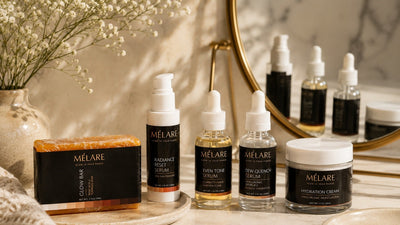
- Gentle Cleansing Gel
- Even Tone Serum (helps support a more even-looking skin tone)
- Hydration Cream
- Broad-spectrum sunscreen, SPF 30+
PM:
- Glow Bar (Kojic Acid + Turmeric Cleansing Bar) — helps cleanse while supporting brighter-looking skin
- Dew Quench Serum (Hyaluronic Complex) — supports hydration and the skin barrier
- Radiance Reset Serum (10% Niacinamide) — supports a more even, brighter-looking appearance
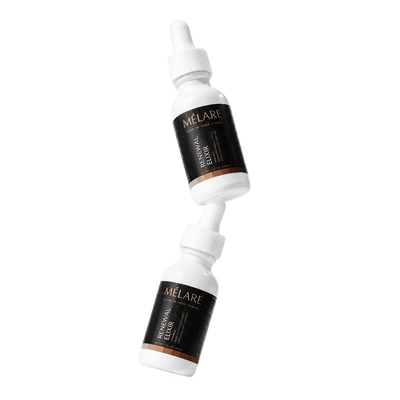
- Renewal Elixir as a final layer, if skin is tolerating actives well
For a full walkthrough of building this kind of routine step by step, see How to Build a Skincare Routine for Dark Spots and Uneven Skin Tone.
Guidance for Sensitive Skin
Sensitive or reactive skin generally does better with fewer, gentler steps and slower introduction of actives. A Sensitive Skin Serum formulated for reactive skin types, paired with a barrier-supporting moisturizer and daily sunscreen, is often a more sustainable starting point than jumping straight into stronger exfoliating acids or multiple actives at once. If irritation appears with any new product, that's the moment to pause and simplify rather than adding something else to counteract it.
PIH vs. Sunspots vs. Melasma: What's the Difference?
Not all dark spots are the same condition, and telling them apart matters because they respond differently to treatment and sun exposure:
- Post-inflammatory hyperpigmentation (PIH) follows an injury or inflammatory event — acne, eczema, a cut, a burn, a reaction to a harsh product. It's temporary pigmentation that typically fades once the original trigger is gone and skin isn't re-irritated (DermNet; NCBI StatPearls).
- Sunspots (solar lentigines) are caused by cumulative UV exposure over time rather than an inflammatory trigger, and tend to appear on areas with the most sun exposure — face, hands, shoulders.
- Melasma is a distinct condition that causes larger, often symmetrical patches, is strongly influenced by hormones and sun exposure, and tends to be more persistent and more prone to returning than typical PIH. The AAD notes that melasma treatments can fade the discoloration but the condition itself can recur, especially with sun exposure.
Because these conditions can look similar but respond differently to treatment, it's worth reading a full comparison: Melasma vs. Hyperpigmentation.
When Persistent Discoloration Warrants Seeing a Dermatologist
Most PIH fades with time, consistent sun protection, and a well-tolerated routine. But it's worth booking a dermatologist visit if:
- A treatment routine hasn't produced any visible change after several months of consistent, correct use — the AAD notes some dark spots require prescription-strength treatment or professional combination therapy that isn't available over the counter (AAD)
- A spot is growing, changing shape, changing color, itching, or bleeding — these can be signs of a different condition entirely and should always be evaluated promptly (AAD)
- You suspect melasma, since it often benefits from earlier, dermatologist-guided treatment
- Irritation, breakouts, or discoloration are getting worse despite simplifying the routine
A dermatologist can also confirm what's actually causing the discoloration, since PIH, melasma, and sunspots aren't always easy to distinguish without a professional exam.
Frequently Asked Questions
Why are my dark spots not fading?
The most common reasons are inconsistent sunscreen use, over-exfoliating or irritating the skin, picking at healing marks, switching products before giving them enough time, or simply expecting a process that naturally takes months to happen in weeks.
Can over-exfoliating make hyperpigmentation worse?
Yes. Excess exfoliation can irritate and inflame skin, and inflammation is a known trigger for post-inflammatory hyperpigmentation — meaning aggressive exfoliation aimed at fading spots can end up creating new ones (NCBI StatPearls).
Why do dark spots come back?
They often "come back" because the underlying trigger — unprotected sun exposure, a new breakout, ongoing irritation — hasn't been fully addressed, not because previously faded spots are truly reappearing. Consistent sun protection is the most effective way to prevent new spots and reduce recurrence.
How long should I use a dark-spot routine before deciding it isn't working?
Most dermatologists suggest waiting at least 8–12 weeks of consistent, correct use before judging results, since visible changes to pigment take time to appear (SELF; AAD).
Can using too many skincare actives make dark spots worse?
It can, if the combination causes irritation. Irritated, inflamed skin is more likely to develop new pigmentation, so introducing actives gradually — one at a time — is generally safer than combining several strong ingredients at once.
Does sunscreen really matter for dark spots?
Yes — it's arguably the most important step. UV exposure darkens existing pigmentation and can trigger new spots, so daily broad-spectrum sunscreen supports both prevention and fading (DermNet; AAD).
What should sensitive skin use for uneven skin tone?
Gentler, lower-irritation formulas introduced slowly, alongside barrier support and daily sunscreen, tend to be better tolerated than strong exfoliating acids or multiple actives layered at once.
When should I see a dermatologist about dark spots?
If a routine hasn't produced visible change after several months, if a spot is changing shape or color, or if you suspect melasma rather than typical post-inflammatory hyperpigmentation, a dermatologist visit is worth it.
Related Reading
- What Causes Uneven Skin Tone? Understanding Dark Spots, Hyperpigmentation & Discoloration
- Kojic Acid Turmeric Soap Benefits: A Complete Guide to Brighter-Looking Skin
- Vitamin C vs. Niacinamide: Which Is Better for Uneven Skin Tone?
- What Is Niacinamide? Benefits, Uses & Why It's One of Skincare's Most Trusted Ingredients
- How to Improve Skin Texture | MÉLARE Skincare Guide
- Stop Buying Skincare Products. Start Building a Skincare Routine.
The Bottom Line
Dark spots that resist fading are rarely a sign that nothing will work — they're often a sign that something in the routine (too much exfoliation, too many actives, inconsistent sunscreen, or simply not enough time) is working against the goal. Slowing down, protecting skin from the sun every day, letting products work on their real timeline, and supporting the skin barrier along the way gives a dark-spot routine the best chance to actually show results.
This article is for general educational purposes and does not replace personalized medical advice. If you have persistent, changing, or concerning skin discoloration, consult a board-certified dermatologist.