Glow Journal › Dark Spots
Dark SpotsHow to Build a Skincare Routine for Dark Spots and Uneven Skin Tone

If you’re dealing with dark spots or uneven-looking skin tone, a helpful routine generally combines four things done consistently: a gentle cleanser, one or two brightening-focused actives (like niacinamide, vitamin C, kojic acid, or azelaic acid), a hydrating layer, and daily broad-spectrum sunscreen. Discoloration typically responds to consistency over weeks and months rather than any single product, and daily sun protection is widely considered an important part of supporting the fading of existing spots and helping reduce the likelihood of new ones (American Academy of Dermatology).
This guide breaks down exactly how to structure a morning and evening routine for dark spots and uneven tone, which ingredients actually help and why, how to adjust for sensitive skin, and what a realistic timeline looks like.
What Causes Dark Spots and Uneven Skin Tone?
Dark spots and uneven tone happen when the skin produces or distributes melanin unevenly. Melanin is the pigment responsible for skin color, and it’s made by cells called melanocytes. When melanocyte activity is triggered unevenly across the face — by sun exposure, inflammation, or hormonal shifts — the result is visible patches, spots, or an overall blotchy tone.
There are three overlapping but distinct patterns worth knowing:
- Post-inflammatory hyperpigmentation (PIH): Dark marks that form after acne, a cut, a burn, or any skin irritation. PIH happens because inflammation triggers melanocytes to release excess pigment into surrounding skin cells, and it tends to be more pronounced and longer-lasting in melanin-rich skin (StatPearls/NCBI; PMC).
- Sunspots (solar lentigines): Flat brown spots that build up gradually from cumulative UV exposure, usually on areas that see the most sun.
- Melasma: Symmetrical, hormone-linked patches most common on the cheeks, forehead, and upper lip, often triggered or worsened by pregnancy, birth control, or sun exposure.
Because melasma has its own triggers and treatment nuances, we cover it in more depth in our dedicated guide on how melasma differs from hyperpigmentation. For a deeper dive into what’s driving discoloration in your specific case, see our full breakdown of the common causes of dark spots and discoloration.
What Causes This Discoloration to Get Worse or Last Longer?
A few common patterns tend to prolong or intensify uneven tone:
- Repeated sun exposure without SPF. UV exposure is closely linked to both the formation of new sun-related spots and the darkening of existing hyperpigmentation, which is why daily sunscreen is consistently recommended for prevention (American Academy of Dermatology; DermNet).
- Picking, popping, or over-exfoliating. Any physical trauma to the skin can trigger a fresh round of post-inflammatory pigmentation, sometimes worse than the original mark.
- Skipping consistency. Melanin production and clearance are gradual processes — sporadic use of actives rarely produces visible change.
- Using too many strong actives at once. Layering multiple exfoliating or brightening acids without building tolerance can cause irritation, which in melanin-rich skin frequently shows up as new hyperpigmentation rather than calmer skin.
Ingredients That Help Improve the Appearance of Dark Spots
Each of the ingredients below works through a different mechanism, which is part of why dermatology research often points to combining a couple of them rather than relying on just one.
Niacinamide
Niacinamide (vitamin B3) doesn’t stop melanin from being produced — it slows the transfer of pigment-carrying melanosomes from melanocytes to the surface skin cells that display them. A widely cited clinical study found niacinamide produced 35–68% inhibition of melanosome transfer in lab models, with visible improvement in facial hyperpigmentation after 4 weeks of consistent use (Hakozaki et al., British Journal of Dermatology, via PubMed). It’s also one of the best-tolerated actives available, which makes it a common starting point. Read our full explainer on what niacinamide is and how it works.
Vitamin C
Vitamin C (ascorbic acid) works differently — it interferes with tyrosinase, the enzyme that drives melanin production, largely by interacting with copper ions at the enzyme’s active site. This reduces how much new pigment gets made in the first place, alongside vitamin C’s antioxidant role in protecting skin from UV-driven free radical damage (Journal of Clinical and Aesthetic Dermatology, PMC). For a side-by-side look at how it compares to niacinamide, see our vitamin C vs. niacinamide comparison.
Kojic Acid
Kojic acid is a tyrosinase inhibitor derived from fungi. It binds copper ions at the tyrosinase active site, blocking the enzyme from producing melanin. A hyperspectral imaging study found kojic acid increased skin brightness in roughly 75% of participants and improved skin homogeneity in about 67% (Journal of Clinical Medicine, PMC). It’s commonly formulated into cleansers as well as leave-on products — see our guide to kojic acid and turmeric for how the two pair together.
Azelaic Acid
Azelaic acid is a naturally occurring dicarboxylic acid that inhibits tyrosinase activity while also calming inflammation — a dual action that makes it particularly useful for post-inflammatory hyperpigmentation, where both pigment production and active irritation are usually in play (Clinical, Cosmetic and Investigational Dermatology, PMC). It’s generally well-tolerated across skin tones and is often recommended for reactive or acne-prone skin.
Licorice Root Extract
Licorice root extract’s brightening activity is largely attributed to glabridin, a compound shown in laboratory research to inhibit tyrosinase while also demonstrating antioxidant and UV-B protective activity, making it a gentler addition for tone-focused formulas (SOFW Journal).
PDRN (Polydeoxyribonucleotide)
PDRN is a newer ingredient in skincare formulations, generally associated with helping support the look of skin recovery and a healthier-looking barrier rather than directly targeting pigment (Pharmaceuticals, PMC). Early laboratory research (in cultured cells and animal models, not human clinical trials) looked at niacinamide, vitamin C, and PDRN formulated together and found the combination was associated with lower markers of melanin production in UV-B-exposed skin compared to controls (Molecules, PMC). Because that research is still preclinical, it’s best read as an early signal rather than a guarantee of visible results — PDRN is generally positioned as a complement to actives like niacinamide or vitamin C within a routine, not a replacement for them.
Hyaluronic Acid
Hyaluronic acid isn’t a brightening ingredient, but it plays a supporting role that’s easy to overlook: a compromised, dehydrated skin barrier is more reactive to actives and slower to recover from irritation, which can indirectly prolong post-inflammatory pigmentation. Hyaluronic acid binds water in the skin and helps reinforce barrier function, which is part of why brightening routines are built around a hydration step rather than actives alone (Revista da Associação Médica Brasileira, PMC).
Morning Skincare Routine for Dark Spots and Uneven Tone
- Cleanse. Start with a gentle, non-stripping cleanser on damp skin. A kojic acid and turmeric bar can double as a mild tyrosinase-inhibiting step during cleansing if your skin tolerates it well.
- Apply an antioxidant/brightening serum. Vitamin C performs best on clean, dry skin. A formula like the Brightening Vitamin C Serum is best applied first, before other actives, so it can absorb fully.
- Layer a tone-focused serum, if using. Give the vitamin C a minute or two to settle, then follow with a niacinamide-based serum such as Radiance Reset Serum, or a dark-spot-focused formula like Even Tone Serum.
- Hydrate. A hyaluronic acid serum such as Dew Quench Serum helps lock in moisture and support the skin barrier before your moisturizer.
- Moisturize. Seal everything in with a Hydration Cream to reduce water loss through the day.
- Sunscreen. Finish every morning with a broad-spectrum SPF 30 or higher. This step plays a significant role in how well the rest of your routine can perform over time.
Nighttime Skincare Routine for Dark Spots and Uneven Tone
- Cleanse to remove sunscreen, oil, and the day’s buildup.
- Exfoliate based on your skin’s tolerance, not a fixed schedule. If you exfoliate, a gentle chemical exfoliant (not a physical scrub) can support cell turnover — but let your skin’s response guide how often, rather than following a set number of times per week. Discoloration-prone skin generally does better exfoliating less frequently, since over-exfoliating tends to trigger irritation and, in turn, more pigmentation.
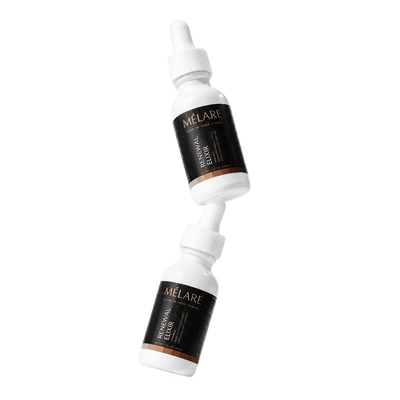
- Apply your targeted active. Alternate or rotate between a niacinamide serum, a dark-spot-focused serum, or, on recovery nights, a PDRN-based formula like Renewal Elixir to help support the look of a healthier, more resilient-looking barrier.
- Hydrate with a hyaluronic acid serum.
- Moisturize to finish, since skin does most of its repair work overnight and benefits from a slightly richer barrier-support layer.
A Note on Routine Order and Consistency
The general sequencing principle is thinnest-to-thickest and water-based-before-oil-based: cleanser, then serums (lightest first), then moisturizer, then SPF in the morning. For a broader look at building sustainable habits rather than just stacking products, see how to build a skincare routine. If uneven texture is compounding the appearance of discoloration, our guide on improving skin texture covers that alongside tone work.
Guidance for Sensitive Skin
Sensitive or reactive skin needs a lower-irritation version of the same approach, because irritation itself can trigger new post-inflammatory pigmentation:
- Start with one active at a time and wait 1–2 weeks before adding another.
- Choose a gentler cleanser, like Gentle Cleansing Gel, over anything with physical exfoliating beads.
- A dedicated Sensitive Skin Serum or a lower-concentration niacinamide formula is generally better tolerated than higher-strength vitamin C or acid-based actives.
- Patch test any new product on your inner arm or jawline for a few days before applying it to your full face.
- PDRN-based formulas are often well tolerated since they’re generally positioned around supporting the look and comfort of the skin barrier rather than active exfoliation or acidification.
Ingredient Combinations People Commonly Ask About
Can I use niacinamide and kojic acid together?
Yes. They work through different mechanisms — niacinamide slows melanosome transfer, while kojic acid inhibits the tyrosinase enzyme directly — so they’re generally considered complementary rather than redundant. As with any new combination, introduce them gradually and watch for irritation.
Can I use vitamin C and niacinamide together?
Yes, and this is one of the most persistent skincare myths to debunk. An old, frequently misquoted 1960s lab study mixed raw ascorbic acid and niacinamide at high heat and high concentration — conditions that don’t reflect how modern, stabilized serums are formulated or how they behave on skin. Layering the two is considered safe by current dermatology guidance. See our full breakdown in vitamin C vs. niacinamide.
Can I combine azelaic acid with other brightening actives?
Azelaic acid is generally well tolerated alongside niacinamide. As with most acids, start by using it at a different time of day than a strong exfoliant to reduce the chance of irritation while your skin adjusts.
Does PDRN replace niacinamide or vitamin C?
No. PDRN is generally considered a complement rather than a substitute — niacinamide and vitamin C are the actives most associated with pigment-related mechanisms, while PDRN is more often associated with supporting the look of skin recovery and barrier resilience. Early lab-based research has explored the three formulated together and found favorable markers in that specific (non-human) study setting (Molecules, PMC), but it doesn’t establish PDRN on its own as a proven pigment-targeting ingredient in humans.
Common Mistakes That Can Make Discoloration Harder to Improve
- Skipping sunscreen on cloudy or indoor days. UV exposure through windows and on overcast days still reaches skin and can undo progress.
- Over-exfoliating. More frequent isn’t more effective — it’s more likely to trigger new post-inflammatory marks.
- Picking at acne or scabs. This is one of the most common (and most avoidable) triggers of new PIH.
- Introducing too many actives simultaneously. Irritation from stacking unfamiliar ingredients often shows up as pigmentation before it shows up as visible redness, especially on melanin-rich skin.
- Expecting results in days. Melanin clearance is a gradual biological process, not an overnight change.
- Stopping as soon as spots start fading. Discontinuing a routine early is one of the most common reasons visible improvement doesn’t hold.
Realistic Expectations: How Long Does It Take to See Results?
Timelines vary by ingredient, pigment depth, and consistency, but general patterns from clinical research include:
- Niacinamide: Visible improvement in hyperpigmentation has been documented after 4 weeks of consistent use in clinical studies (PubMed).
- Vitamin C: Fading of deeper or more established spots is generally reported over a longer window — for example, one clinical study of a 25% topical vitamin C formulation reported a significant decrease in melasma-related pigmentation after 16 weeks of consistent use (JCAD, PMC).
- Epidermal PIH (the more surface-level type): Often improves significantly within 6–12 months as part of its natural course, and consistent care with daily sunscreen is generally considered supportive of that process (StatPearls/NCBI).
- Dermal pigmentation or melasma: Tends to respond more slowly and can persist longer, which is why sun protection and patience matter even more for these types.
The honest takeaway: give any new routine at least 8–12 weeks before judging whether it’s working, and don’t expect a single product to do the job alone.
Why Sunscreen Matters for Dark Spots and Uneven Tone
Sunscreen plays an important role in any routine focused on dark spots or uneven tone. UV exposure can contribute to new pigmentation and darken existing spots, and dermatology sources consistently point to daily broad-spectrum SPF as a key part of supporting visible improvement over time (American Academy of Dermatology; DermNet). Skipping sunscreen while using brightening actives can work against the results you’re aiming for.
Look for broad-spectrum SPF 30 or higher, and reapply if you’re outdoors for extended periods.
Frequently Asked Questions
How do I build a skincare routine for dark spots?
Start with a gentle cleanser, add one or two tone-focused actives (such as niacinamide, vitamin C, kojic acid, or azelaic acid), layer in a hydrating step like hyaluronic acid, and finish every morning with broad-spectrum sunscreen. Consistency over 8–12+ weeks matters more than any single product.
What is the best skincare routine for uneven skin tone?
There’s no single “best” routine — the most effective approach combines a brightening active suited to your skin’s sensitivity, daily hydration, and daily sunscreen, used consistently. Sensitive skin generally does better starting with gentler options like niacinamide before introducing stronger acids.
What ingredients help improve the appearance of dark spots?
Niacinamide, vitamin C, kojic acid, azelaic acid, and licorice root extract are among the most studied ingredients for uneven tone, each working through a slightly different mechanism in melanin production or transfer.
What order should I apply skincare for hyperpigmentation?
Generally: cleanse, then lightest-to-thickest serums (vitamin C before niacinamide is a common approach), then hydration, then moisturizer, then sunscreen in the morning.
Can I use niacinamide and kojic acid together?
Yes — they target different steps in melanin production, so they’re generally considered complementary. Introduce new combinations gradually to check tolerance.
How long does a dark-spot skincare routine take to show visible improvement?
Some ingredients, like niacinamide, have shown visible change within about 4 weeks in clinical studies, while deeper or more established pigmentation can take 8–16 weeks or longer. Give any new routine at least 8–12 weeks before evaluating results.
What should sensitive skin use for uneven tone?
Sensitive skin generally does best starting with a single, well-tolerated active like niacinamide or a lower-strength formula, using a gentle non-foaming cleanser, and introducing any new product gradually with patch testing.
Why is sunscreen important when addressing dark spots?
UV exposure is considered one of the main contributors to both new pigmentation and the darkening of existing spots. Skipping sunscreen can work against the benefit of brightening actives, which is why dermatology sources consistently recommend daily broad-spectrum SPF as part of a routine for dark spots and uneven tone.
The Bottom Line
Dark spots and uneven skin tone tend to respond best to a routine that’s realistic and sustainable: a gentle cleanse, one or two well-chosen actives suited to your skin’s tolerance, consistent hydration, and daily sun protection. There’s no ingredient that works overnight, but with roughly 8–12 weeks of consistency — and daily sunscreen as a core part of the routine — many people see meaningful improvement in how even and bright their skin looks.