Glow Journal › Hyperpigmentation
HyperpigmentationVitamin C vs Niacinamide: Which Is Better for Uneven Skin Tone?

If you have ever stood in the skincare aisle staring at two brightening serums — one with vitamin C, one with niacinamide — and wondered which one is actually going to fade your dark spots, you are not alone. It is one of the most common questions in skincare, and the honest answer is that both ingredients are excellent for uneven skin tone. They just get there in different ways.
At MÉLARE, we formulate for melanin-rich skin and the real-world concerns that come with it — hyperpigmentation, post-acne marks, and stubborn unevenness that does not always respond to whatever is trending. So let us break down vitamin C vs niacinamide honestly: what each one is, how it works, which is better for your skin, and whether you can use them together.
What Is Vitamin C?
Vitamin C (specifically L-ascorbic acid and its stable derivatives) is a water-soluble antioxidant that your skin cannot make on its own. Topically applied, it does three big things: neutralizes free radicals from UV and pollution, supports collagen synthesis, and helps fade pigmentation (NCBI).
When it comes to dark spots, vitamin C works upstream. It interferes with tyrosinase, the enzyme that drives melanin production, by interacting with copper ions at the enzyme's active site — which decreases melanin formation at the source (NCBI). In other words, it tells your skin to make less pigment in the first place.
What Is Niacinamide?
Niacinamide is a form of vitamin B3, and it is one of the most studied, best-tolerated ingredients in all of skincare. It strengthens the skin barrier, regulates oil production, reduces redness, and helps even out tone (Healthline).
For pigmentation, niacinamide works differently than vitamin C. Instead of stopping melanin from being made, it blocks the transfer of melanosomes (the pigment-carrying packets) from melanocytes to the keratinocytes at your skin's surface. A landmark study found niacinamide produced 35–68% inhibition of melanosome transfer in lab models and significantly decreased hyperpigmentation after just 4 weeks of use in clinical trials (PubMed). So it does not stop pigment production — it stops that pigment from showing up as a visible dark spot.
How Each Ingredient Works on Dark Spots and Uneven Tone
The key difference is mechanism and speed:
- Vitamin C inhibits tyrosinase directly, reducing melanin production. It also delivers strong antioxidant protection against the UV-induced free radicals that trigger new pigmentation in the first place (NCBI).
- Niacinamide interrupts melanosome transfer and calms inflammation, which is especially useful for post-inflammatory hyperpigmentation (PIH) — the dark marks left behind after acne, eczema, or irritation, a major concern for melanin-rich skin (NCBI).
Because they target two different steps in the pigmentation process, they are genuinely complementary rather than competing. Vitamin C tends to act faster and more dramatically on existing sun-induced spots, while niacinamide is gentler and excels at maintaining an even tone and preventing new marks (Practical Dermatology).
Which Is Better for Melanin-Rich Skin?
This is the question that matters most for our community. Melanin-rich skin (Fitzpatrick types IV–VI) is more prone to post-inflammatory hyperpigmentation because melanocytes in deeper skin tones are more reactive and release pigment more aggressively in response to inflammation or injury (NCBI). That reactivity cuts both ways: the wrong active can irritate the skin and actually trigger more pigmentation.
This is where the two ingredients diverge:
- Niacinamide is the gentler, lower-risk choice. It is well-tolerated across skin types, rarely causes irritation, and addresses both the pigment transfer and the underlying inflammation that drives PIH. For sensitive, acne-prone, or reactive melanin-rich skin, niacinamide is often the smarter starting point.
- Vitamin C is more potent but needs more care. Pure L-ascorbic acid requires a low (acidic) pH to be effective, which can sting sensitive skin and, in rare cases, provoke the very irritation that leads to more dark spots. Stable derivatives (like sodium ascorbyl phosphate or tetrahexyldecyl ascorbate) are gentler and a good option if you want the brightening without the sting.
The practical takeaway: if your skin is reactive, start with niacinamide. If you are chasing stubborn sun damage or dullness and your skin tolerates actives well, vitamin C can deliver faster visible results. Many people do best using both.
Vitamin C vs Niacinamide at a Glance
| Feature | Vitamin C | Niacinamide |
|---|---|---|
| What it is | Antioxidant (ascorbic acid) | Vitamin B3 |
| How it brightens | Inhibits tyrosinase → less melanin made | Blocks melanosome transfer → less pigment reaches the surface |
| Best for | Sun spots, dullness, collagen support, photoaging | Post-acne marks, PIH, redness, oily skin, barrier repair |
| Speed | Faster on existing spots (often 8–12 weeks) | Steadier, great for prevention (visible in ~4–8 weeks) |
| Irritation risk | Higher with pure L-ascorbic acid; lower with derivatives | Low; very well tolerated |
| Best skin types | Normal to oily, non-reactive, photoaged | All types, especially sensitive and acne-prone |
| Pairs well with | Sunscreen, vitamin E, ferulic acid | Hyaluronic acid, ceramides, retinol, vitamin C |
Can You Use Vitamin C and Niacinamide Together?
Yes — and you probably should. The old rumor that they "cancel each other out" is one of the most persistent myths in skincare, and it has been thoroughly debunked. The myth traces back to a 1960s lab study in which raw ascorbic acid and niacinamide were mixed together at high concentrations and high heat, forming nicotinic acid (which can cause flushing). Those conditions have nothing to do with how real, modern, stabilized serums behave on your skin (Healthline).
Current dermatology guidance is that the two are safe to layer, and because they target pigmentation through different pathways, they often work better together than either does alone (GoodRx). The American Academy of Dermatology and European Academy of Dermatology and Venereology both recognize the pairing for hyperpigmentation, dullness, and barrier support.
How to Layer Vitamin C and Niacinamide
If you want to use both in the same routine, a little sequencing goes a long way:
- Cleanse thoroughly on dry skin.
- Apply vitamin C first. L-ascorbic acid needs a low pH and absorbs best on clean, dry skin. Give it about a minute to settle.
- Apply niacinamide second. It layers cleanly over vitamin C and reinforces the barrier.
- Finish with moisturizer and, in the morning, SPF. Sunscreen is non-negotiable — UV is the single biggest driver of the pigmentation you are trying to fade, and no serum can out-work daily sun exposure.
If your skin is sensitive or you are introducing both actives for the first time, an easier approach is to split them: vitamin C in the morning (paired with SPF) and niacinamide at night. This minimizes any chance of irritation while still giving you the benefits of both.
Where to Find Them (Including a Few Favorites)
Both ingredients are widely available, but formulation matters. A well-formulated serum at the right concentration and pH will always outperform a trendy product with a weak actives load.
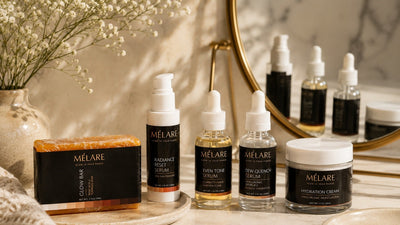
- For vitamin C: Look for L-ascorbic acid at 10–20% (or a stable derivative like sodium ascorbyl phosphate if your skin is sensitive) in an opaque, airtight package — vitamin C oxidizes quickly in light and air (NCBI). Our Brightening Vitamin C Serum is formulated to brighten and even out tone while staying gentle enough for regular use.
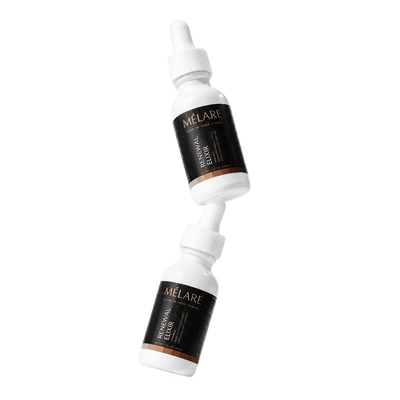
- For niacinamide: The clinical sweet spot is around 4–5% for visible hyperpigmentation reduction, though 10% is common and well-tolerated for maintenance and barrier support (NCBI). Our Even Tone Serum and Radiance Reset Serum (10% niacinamide) are built around this ingredient specifically for uneven, melanin-rich skin.
You do not need both — but if your main concern is stubborn, recurring dark spots, using them together is the most effective approach. Shop MÉLARE's full range of skincare for melanin-rich skin.
Safety Considerations
Both ingredients are considered safe for long-term daily use, but a few cautions apply:
- Patch test first, especially if you have sensitive skin. Apply a small amount behind your ear or along your jawline for a few days before going all-in.
- With vitamin C, watch the strength and pH. High-concentration L-ascorbic acid can cause stinging, redness, or flaking. If that happens, drop to a lower percentage or switch to a gentler derivative.
- Do not skip sunscreen. Both ingredients make your skin more invested in the brightening process, and UV exposure will undo the results — and trigger fresh pigmentation, especially in melanin-rich skin.
- If you are pregnant or treating melasma, niacinamide is generally considered a safer, better-tolerated option than many other brighteners and is widely recommended during pregnancy.
- Discontinue and consult a dermatologist if you experience persistent redness, itching, or worsening pigmentation — that can be a sign of irritation-induced PIH.
The Bottom Line
Vitamin C and niacinamide are not rivals — they are partners. Vitamin C is your faster, more aggressive brightener for established sun damage and dullness, working by slowing melanin production at the source. Niacinamide is your gentler, steadier multitasker, working by blocking pigment transfer, calming inflammation, and strengthening the barrier — which is exactly why it is a hero for melanin-rich, PIH-prone skin.
For most people dealing with uneven tone, the best results come from using both, layered thoughtfully and protected with daily SPF. Choose based on your skin's tolerance and your primary concern, and remember: consistency beats intensity every time. Ready to start? Explore our Brightening Vitamin C Serum, Even Tone Serum, and Radiance Reset Serum — all formulated for melanin-rich skin.
FAQ
Can I use vitamin C and niacinamide at the same time?
Yes. The idea that they cancel each other out is a debunked myth from outdated lab research. Modern, stabilized formulas can be layered safely, and many dermatologists recommend the pairing because the two ingredients brighten through different pathways (Healthline).
Which is better for dark spots from acne (PIH)?
Niacinamide has the edge for post-inflammatory hyperpigmentation because it both blocks melanosome transfer and reduces the inflammation that caused the mark in the first place (NCBI). It is also better tolerated by the sensitive, acne-prone skin that typically produces PIH.
How long until I see results?
Most people see noticeable improvement with niacinamide within 4–8 weeks of consistent use, while vitamin C tends to show visible fading of deeper spots around 8–12 weeks. Either way, expect 12–16 weeks for the full picture — and only with daily sunscreen.
Can I use both with retinol?
Yes, but layer carefully. A common, skin-friendly approach is vitamin C in the morning (with SPF) and retinol at night, with niacinamide either morning or evening. Niacinamide actually helps buffer the irritation retinol can cause, so the two pair well. If you are new to actives, introduce one ingredient at a time over a few weeks before combining.
Which should I start with if I have sensitive, melanin-rich skin?
Start with niacinamide. It is one of the best-tolerated actives available, addresses both pigmentation and barrier health, and carries a very low risk of the irritation that can trigger more dark spots in deeper skin tones. Our Even Tone Serum and Radiance Reset Serum are both formulated with niacinamide for melanin-rich skin. Once your skin is happy, you can layer in our Brightening Vitamin C Serum for extra brightening.